
How AI Automation Can Reduce Business Operating Costs
October 23, 2026
Digital Catalogue vs Printed Catalogue: Which Is Better?
October 28, 2026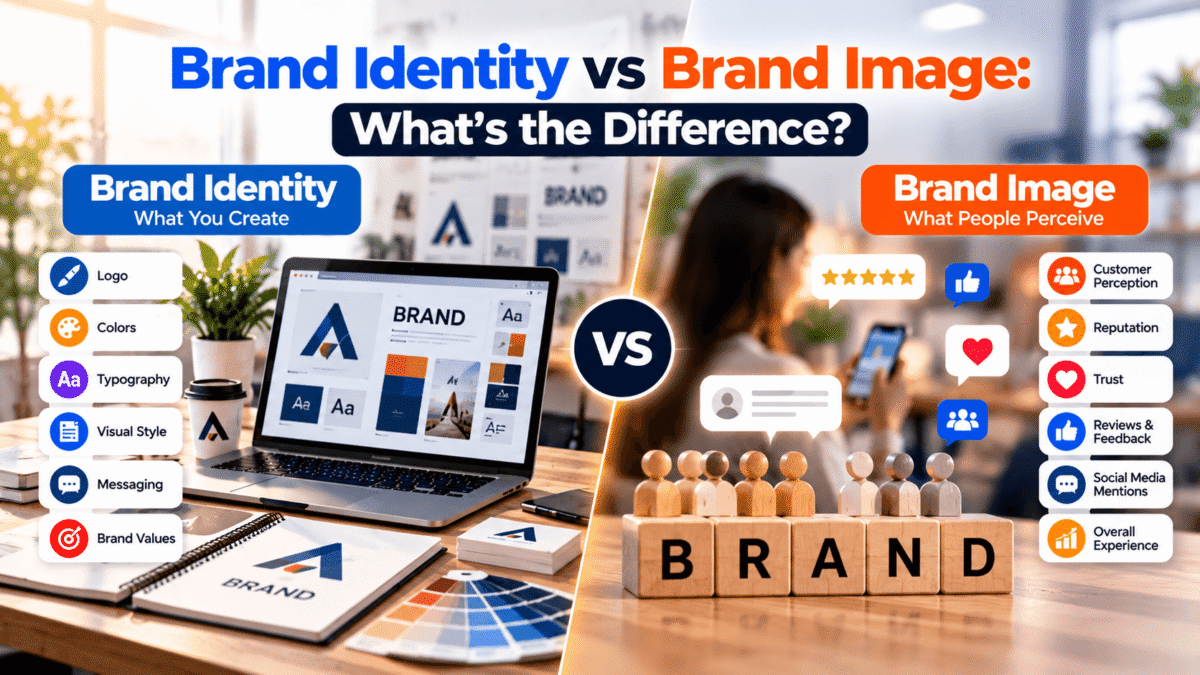
In a competitive digital marketplace, having a recognizable brand is no longer simply about choosing an attractive logo or creating a memorable tagline. Businesses need to understand how they present themselves, how customers perceive them, and why those two things do not always match.
This is where the difference between brand identity and brand image becomes important.
The terms are often used interchangeably, but they describe two different sides of branding. Brand identity represents how a business intentionally defines and presents itself, while brand image represents how customers actually perceive and experience that business.
Understanding Brand Identity vs Brand Image: What’s the Difference? can help businesses build stronger positioning, create consistent communication, improve customer experiences, and develop a more recognizable presence across digital and offline channels.
A business may have a carefully designed identity, but if its messaging, customer service, products, website, and marketing experiences do not support that identity, the resulting brand image can be very different from what the business intended.
This article explores the relationship between brand identity and brand image, their key differences, the elements involved in each, common mistakes businesses make, and practical ways to create stronger alignment between the two.
What Is Brand Identity?
Brand identity is the collection of deliberate elements a business creates to communicate who it is, what it represents, and how it wants to be recognized.
In simple terms, brand identity is the intentional expression of a brand.
It includes the visual, verbal, strategic, and experiential components that define the business. These elements work together to create a consistent representation of the organization across different touchpoints.
Brand identity answers questions such as:
- Who are we?
- What do we stand for?
- What makes us different?
- Who are we trying to reach?
- What personality should our brand communicate?
- What values should customers associate with us?
- How should our brand look and sound?
A strong identity provides a framework for making branding decisions. It helps businesses maintain consistency whether they are publishing a social media post, designing a website, launching an advertising campaign, packaging a product, or communicating directly with customers.
Key Elements of Brand Identity
Brand identity is broader than visual design. It can include several interconnected elements.
Brand purpose explains why the organization exists beyond simply selling products or services.
Brand vision describes the future the business wants to help create.
Brand mission communicates what the organization does and how it aims to deliver value.
Brand values establish the principles that influence decisions and behavior.
Brand positioning defines how the business wants to occupy a distinctive position in its target market.
Brand personality determines whether the brand communicates as professional, approachable, sophisticated, innovative, energetic, traditional, or in another recognizable style.
Visual identity includes elements such as logos, typography, color systems, photography direction, graphic elements, layouts, and other visual assets.
Verbal identity includes the tone of voice, terminology, messaging style, headlines, taglines, and communication principles used by the business.
Together, these components establish the identity a business wants to communicate.
What Is Brand Image?
Brand image is the perception that customers, prospects, employees, partners, and other audiences form about a business.
While brand identity is created intentionally by the organization, brand image develops through experiences, interactions, exposure, opinions, and associations.
Brand image answers a different question:
“What do people actually think and feel when they encounter this brand?”
Customers may associate a business with qualities such as reliability, affordability, innovation, luxury, convenience, professionalism, friendliness, quality, or poor service.
These perceptions are shaped by more than advertising.
A customer may encounter a brand through its website, social media presence, online reviews, customer support, product quality, sales representatives, physical location, packaging, advertisements, or conversations with other customers.
Every interaction can influence brand image.
How Brand Image Is Formed
Brand image develops gradually rather than being created through one individual marketing campaign.
Several factors can contribute to it:
- Product or service quality
- Customer experience
- Website experience
- Advertising and marketing communication
- Social media activity
- Reviews and testimonials
- Customer service
- Pricing and perceived value
- Public communication
- Brand consistency
- Employee interactions
- Word-of-mouth recommendations
- Previous customer experiences
This means businesses can influence brand image, but they cannot completely control it.
A company can say that it is premium, but customers may perceive it as expensive without sufficient value.
A business can describe itself as customer-focused, but poor support experiences may create the opposite impression.
This distinction is fundamental when examining Brand Identity vs Brand Image: What’s the Difference?
Brand Identity vs Brand Image: The Core Difference
The simplest distinction is:
Brand identity is how a business wants to be perceived. Brand image is how the audience actually perceives it.
Brand identity comes primarily from the organization.
Brand image comes primarily from the audience’s interpretation of the brand.
For example, a business may develop an identity centered around professionalism, transparency, innovation, and high-quality service. It may create a sophisticated visual system and use carefully developed messaging.
However, if its website is difficult to navigate, customer support is slow, and communication is inconsistent, customers may develop an image that does not match the intended identity.
The identity says one thing.
The experience communicates another.
That gap between identity and image can affect trust, differentiation, and long-term brand value.
Brand Identity vs Brand Image: A Practical Comparison
Although the two concepts are closely connected, they differ in several important ways.
1. Identity Is Created; Image Is Perceived
Brand identity is deliberately developed by the organization.
The business chooses its positioning, visual language, communication style, values, and messaging.
Brand image is formed by audiences based on what they see, hear, experience, and believe.
This means a business can design its identity, but it cannot simply dictate its image.
2. Identity Is Intentional; Image Is Interpretive
Brand identity represents strategic intention.
A company may intentionally position itself as approachable and accessible.
However, if its communication is filled with technical terminology and formal corporate language, customers may interpret the brand as complicated or distant.
Brand image therefore depends heavily on interpretation.
3. Identity Is Controlled Internally; Image Is Influenced Externally
Organizations have significant control over identity elements.
They can define:
- Brand colors
- Typography
- Messaging
- Visual direction
- Brand voice
- Positioning
- Values
- Communication guidelines
Brand image is influenced by external experiences.
Customers, market conversations, reviews, competitors, media coverage, and interactions with the business can all contribute to perception.
4. Identity Is the Intended Message; Image Is the Received Meaning
Communication involves both sending and receiving.
Brand identity represents the message a business intentionally sends.
Brand image represents the meaning the audience receives and associates with that message.
Strong branding attempts to minimize unnecessary differences between the two.
5. Identity Can Be Defined; Image Must Be Earned
A business can write its brand values in a brand guideline document in a matter of days.
But customers will not automatically believe those values.
They need to see them demonstrated through products, services, communication, and experiences.
Brand image is therefore built over time.
Why Brand Identity Matters
A clear brand identity provides businesses with strategic direction.
Without an established identity, different departments may communicate in completely different ways.
The website may appear corporate.
Social media may appear casual.
Advertising may use a completely different visual language.
Sales teams may describe the business differently from marketing teams.
Over time, these inconsistencies can weaken recognition.
A defined brand identity helps establish a common framework.
Brand Identity Creates Recognition
Consistent visual and verbal elements help people recognize a business more easily.
When colors, typography, imagery, messaging, and design principles remain consistent, audiences begin to associate those characteristics with the organization.
Recognition becomes especially important when customers encounter the business across multiple platforms.
Brand Identity Builds Differentiation
Many businesses operate in crowded categories where products and services can appear similar.
Brand identity gives businesses a way to express their unique perspective.
Differentiation can come from positioning, personality, communication style, design, values, customer experience, or a combination of these elements.
Brand Identity Supports Consistency
Consistency does not mean every marketing asset must look identical.
Instead, it means that different communications should feel as though they belong to the same brand.
A consistent identity helps maintain that connection.
Why Brand Image Matters
Brand image influences how audiences interpret the business.
Even a technically strong identity cannot guarantee a positive perception.
Customers ultimately evaluate brands through their experiences.
Brand Image Influences Trust
People are more likely to trust businesses when their communication and experiences feel consistent.
If a company promises reliability but repeatedly misses deadlines, its brand image may become disconnected from its stated identity.
Trust is therefore built through repeated evidence.
Brand Image Influences Customer Decisions
Perception can influence whether someone considers a business, requests information, makes a purchase, returns for another purchase, or recommends the business to someone else.
The actual influence varies by industry and customer context, but perception remains an important part of the customer decision process.
Brand Image Affects Long-Term Reputation
Brand image is not limited to individual transactions.
Repeated customer experiences can create broader associations around the business.
Over time, those associations contribute to reputation.
The Relationship Between Brand Identity and Brand Image
Brand identity and brand image should not be viewed as competing concepts.
They are connected.
A useful way to understand the relationship is:
Brand Identity → Brand Communication → Customer Experience → Brand Perception → Brand Image
A business establishes an identity.
It communicates that identity through different touchpoints.
Customers experience those communications and interactions.
They interpret those experiences.
Those interpretations contribute to brand image.
The process is not perfectly linear because customers bring their own expectations, experiences, cultural context, preferences, and assumptions to every interaction.
Nevertheless, businesses can significantly improve alignment by making sure their identity is reflected consistently throughout the customer journey.
What Happens When Brand Identity and Brand Image Do Not Match?
A gap between identity and image is not automatically a branding failure.
Some differences are natural because audiences interpret brands differently.
However, a significant or persistent gap can create strategic problems.
Confusing Brand Perception
If a business presents itself differently across channels, customers may struggle to understand what it represents.
Reduced Differentiation
If the intended positioning is unclear in actual customer experiences, the brand may become difficult to distinguish from competitors.
Loss of Credibility
When brand promises consistently contradict customer experiences, people may become skeptical of future claims.
Inconsistent Customer Experience
A brand identity that emphasizes premium service should be supported by every relevant interaction.
Otherwise, customers may experience a disconnect between expectation and reality.
How to Align Brand Identity With Brand Image
The goal is not to control every customer opinion.
The goal is to create a coherent experience that makes the intended brand positioning credible.
Define Your Brand Strategy Clearly
Before developing visual assets, establish the strategic foundation.
Define:
- Target audience
- Market category
- Positioning
- Purpose
- Values
- Differentiators
- Personality
- Core customer promise
These elements provide direction for subsequent branding decisions.
Develop a Consistent Visual Identity
Visual consistency helps reinforce recognition.
Establish clear guidelines for:
- Logo usage
- Color palette
- Typography
- Photography
- Illustration
- Iconography
- Layout
- Spacing
- Digital interfaces
The objective is not to restrict creativity.
Instead, guidelines provide a recognizable visual framework.
Establish a Clear Brand Voice
A brand should sound consistent as well as look consistent.
Define how the organization communicates.
For example, decide whether communication should be:
- Formal or conversational
- Technical or accessible
- Bold or understated
- Traditional or contemporary
- Authoritative or approachable
The appropriate voice depends on the audience, industry, positioning, and business objectives.
Make the Website Reflect the Brand
A website is often one of the most important brand touchpoints.
The visual design, copywriting, navigation, performance, imagery, interactions, and user experience should support the intended positioning.
If a brand positions itself as sophisticated but has an outdated and confusing website, the digital experience can undermine its identity.
Align Customer Experience With Brand Promise
Branding does not end when the customer leaves a website.
Sales interactions, onboarding, support, delivery, product experience, and post-purchase communication can all influence brand image.
Every relevant touchpoint should reinforce the expectations established by the brand.
Collect and Analyze Customer Feedback
Businesses need external perspectives to understand their actual brand image.
Useful sources can include:
- Customer interviews
- Surveys
- Reviews
- Support conversations
- Social media feedback
- Website behavior
- Sales feedback
- Customer retention patterns
The objective is to identify recurring perceptions rather than react to isolated comments.
Common Brand Identity Mistakes
Businesses often make predictable mistakes when developing their identities.
Focusing Only on the Logo
A logo is an important visual asset, but it is not the entire brand identity.
A strong identity requires strategic positioning, visual consistency, verbal communication, and customer experience.
Changing Branding Too Frequently
Frequent visual changes can make it difficult for customers to establish strong associations.
Brand evolution may be necessary, but it should generally have a clear strategic reason.
Copying Competitor Positioning
A business can study its market without simply reproducing another company’s identity.
Effective branding should communicate a distinctive reason for customers to recognize and remember the business.
Ignoring Internal Teams
Employees are often part of the customer experience.
If employees do not understand the brand promise or communication principles, inconsistencies can appear throughout the customer journey.
Making Promises the Business Cannot Deliver
A sophisticated brand message cannot compensate for an inconsistent product or service.
Brand promises should be credible and supported by actual operational capabilities.
Common Brand Image Problems
Brand image problems often develop when customer experiences contradict brand communication.
Inconsistent Experiences
Different departments or channels may provide dramatically different experiences.
Poor Communication
Delayed, unclear, or contradictory communication can influence perception even when the underlying product is strong.
Outdated Digital Presence
A website or social presence that no longer reflects the company’s current positioning can create an outdated impression.
Negative Customer Experiences
Repeated service problems can become stronger contributors to brand perception than advertising.
Lack of Differentiation
If customers cannot identify a meaningful reason to choose one brand over another, the resulting image may become generic.
How to Measure Brand Image
Because brand image exists in people’s perceptions, measurement requires customer-centered research.
Businesses can evaluate brand image through both qualitative and quantitative methods.
Brand Awareness Research
Measure whether target audiences recognize or recall the brand.
Perception Surveys
Ask customers what characteristics they associate with the business.
Questions can explore attributes such as:
- Trustworthiness
- Quality
- Innovation
- Value
- Convenience
- Professionalism
- Reliability
Customer Reviews
Reviews can reveal recurring themes in customer experiences.
Rather than focusing only on star ratings, businesses can analyze repeated language and topics.
Social Listening
Monitoring public conversations can reveal how audiences discuss a brand outside controlled marketing channels.
Customer Interviews
Interviews provide deeper insight into why customers perceive the brand in a particular way.
How to Build a Stronger Brand Identity
A strong brand identity does not need to be complicated.
It needs to be coherent.
Start by defining the strategic foundation.
Then translate that strategy into a visual and verbal system.
Finally, apply that system consistently across relevant customer touchpoints.
A practical process can include:
1. Research
Understand the audience, category, customer expectations, and competitive environment.
2. Strategy
Define positioning, purpose, values, personality, and differentiation.
3. Identity Development
Create the visual and verbal system that expresses the strategy.
4. Implementation
Apply the identity across websites, marketing materials, social media, packaging, sales materials, and other relevant touchpoints.
5. Experience Alignment
Ensure the actual customer experience supports the brand promise.
6. Measurement
Collect feedback and monitor whether customer perception aligns with strategic objectives.
7. Refinement
Adjust communication or customer experiences when meaningful gaps appear.
Brand Identity Is More Than Visual Design
One of the most important lessons from the discussion around Brand Identity vs Brand Image: What’s the Difference? is that branding is not simply graphic design.
A visual identity can create recognition, but strategic branding determines what that recognition means.
A business can have an attractive website, modern logo, carefully selected typography, and professional photography while still lacking a clear market position.
The visual system needs a strategic foundation.
Similarly, a strong strategy can lose effectiveness if it is expressed inconsistently.
The strongest branding connects strategy, identity, communication, and experience.
Brand Identity, Brand Image, and Brand Reputation
These three concepts are related but should not be treated as identical.
Brand identity is the intended expression of the brand.
Brand image is the perception audiences form about the brand.
Brand reputation develops from broader and often longer-term judgments based on accumulated experiences, behavior, credibility, and public perception.
One way to visualize the relationship is:
Identity = What we communicate
Image = What people perceive
Reputation = What people come to believe over time
A business needs to consider all three when developing a sustainable brand strategy.
Why Consistency Matters Across Digital Touchpoints
Modern customers rarely interact with a business through only one channel.
Someone may discover a company through search, visit its website, see a social media post, read customer reviews, receive an email, speak with a salesperson, and eventually purchase.
Each interaction contributes to perception.
This makes consistency increasingly important.
The website should not feel disconnected from social media.
Marketing campaigns should not contradict brand positioning.
Sales communication should support the same customer promise.
Customer support should reinforce the expected experience.
When these touchpoints work together, customers receive a clearer and more coherent impression.
When Should a Business Revisit Its Brand Identity?
A brand identity may need review when the business undergoes meaningful changes.
Examples include:
- Entering a new market
- Expanding the target audience
- Launching new products or services
- Changing business positioning
- Merging or restructuring
- Experiencing significant growth
- Moving from local to broader markets
- Updating an outdated visual system
- Experiencing a persistent identity-image gap
A refresh does not always require a complete rebrand.
Sometimes the right approach is to refine messaging, improve visual consistency, clarify positioning, or modernize selected identity elements.
Building a Brand Where Identity and Image Work Together
The ultimate objective is not to create an identity that looks impressive in a brand guideline document.
The objective is to create an identity that customers can recognize and experience consistently.
When the brand says it is reliable, the customer experience should demonstrate reliability.
When it positions itself around innovation, its products, communication, and customer experience should support that perception.
When it emphasizes quality, quality should be evident beyond advertising.
This is where brand strategy becomes practical.
A successful identity creates expectations.
A consistent customer experience validates those expectations.
Repeated validation strengthens brand image.
Frequently Asked Questions About Brand Identity vs Brand Image
Is brand identity the same as brand image?
No. Brand identity represents how a business intentionally presents and defines itself, while brand image represents how audiences actually perceive the business.
Which comes first, brand identity or brand image?
Brand identity is generally established first as a strategic and communicative framework. Brand image develops as audiences encounter and interpret that identity through experiences and interactions.
Can a business control its brand image?
A business cannot completely control brand image because perception belongs to the audience. However, businesses can influence perception through consistent communication, customer experience, products, services, and behavior.
Why is brand identity important?
Brand identity provides a consistent framework for communicating a company’s positioning, personality, values, and differentiation across customer touchpoints.
Why is brand image important?
Brand image reflects how audiences perceive the business. It can influence recognition, trust, expectations, customer decisions, and long-term relationships.
What causes a gap between brand identity and brand image?
A gap can occur when brand communication, customer experiences, product quality, service, or public interactions do not support the identity the business is trying to communicate.
Can rebranding improve brand image?
A rebrand can help when the existing identity no longer reflects the business or its desired positioning. However, changing visual elements alone may not resolve deeper perception issues caused by customer experience or inconsistent communication.
Final Thoughts on Brand Identity vs Brand Image
Understanding Brand Identity vs Brand Image: What’s the Difference? is essential for businesses that want to build a recognizable and credible presence.
Brand identity is the foundation a business intentionally creates. It defines how the organization wants to communicate its purpose, values, positioning, personality, and promise.
Brand image is the perception that develops among customers and other audiences through communication and experience.
The strongest brands work toward alignment between the two.
That alignment does not mean every customer will have exactly the same opinion. Instead, it means the business consistently communicates a clear promise and provides experiences that make that promise believable.
For businesses reviewing their positioning, visual identity, digital presence, or overall branding strategy, the important question is not simply “Does our brand look good?”
The more useful question is:
“Does the experience people have with our brand match what we want our brand to represent?”
When identity, communication, and experience work together, a business can create a stronger foundation for recognition, differentiation, trust, and long-term brand development.
Build a More Consistent Brand
If your current brand identity does not accurately communicate your positioning, or if there is a noticeable gap between how your business wants to be perceived and how customers actually perceive it, it may be time to review your branding strategy.
A structured brand strategy can help clarify your positioning, refine your identity, strengthen communication, and create greater consistency across digital touchpoints.
Ready to evaluate and strengthen your brand? Talk to our team about your branding requirements.