
The Role of Packaging in Brand Identity
November 4, 2026
On-Page SEO vs Off-Page SEO: What’s the Difference?
November 9, 2026
In today’s competitive business environment, creating a strong brand requires more than offering quality products or services. Businesses need a recognisable identity that communicates their values, personality, vision, and purpose. Every interaction with customers contributes to how they perceive a company, from its website and packaging to its advertisements, social media presence, and marketing materials. One of the most recognisable elements of this experience is the logo.
A logo is often the first visual element people associate with a business. It helps customers identify a company, creates an initial impression, and provides a visual foundation for other branding materials. However, a logo alone does not represent the complete brand identity. It is one important component of a broader system that defines how a business presents itself to the world.
Understanding How Logo Design Fits Into Brand Identity helps businesses make better branding decisions and develop a consistent image across different marketing channels. A professionally designed logo should communicate the right message, reflect the company’s personality, and work alongside other visual elements such as typography, colours, imagery, and graphic styles.
Whether a business is launching a new product, entering a competitive market, or refreshing its existing image, logo design plays an important role in creating a memorable brand experience.
In this comprehensive guide, we will explore the relationship between logo design and brand identity, the essential elements of effective logo design, the professional design process, and how businesses can develop a consistent and recognisable brand.
What Is Brand Identity?
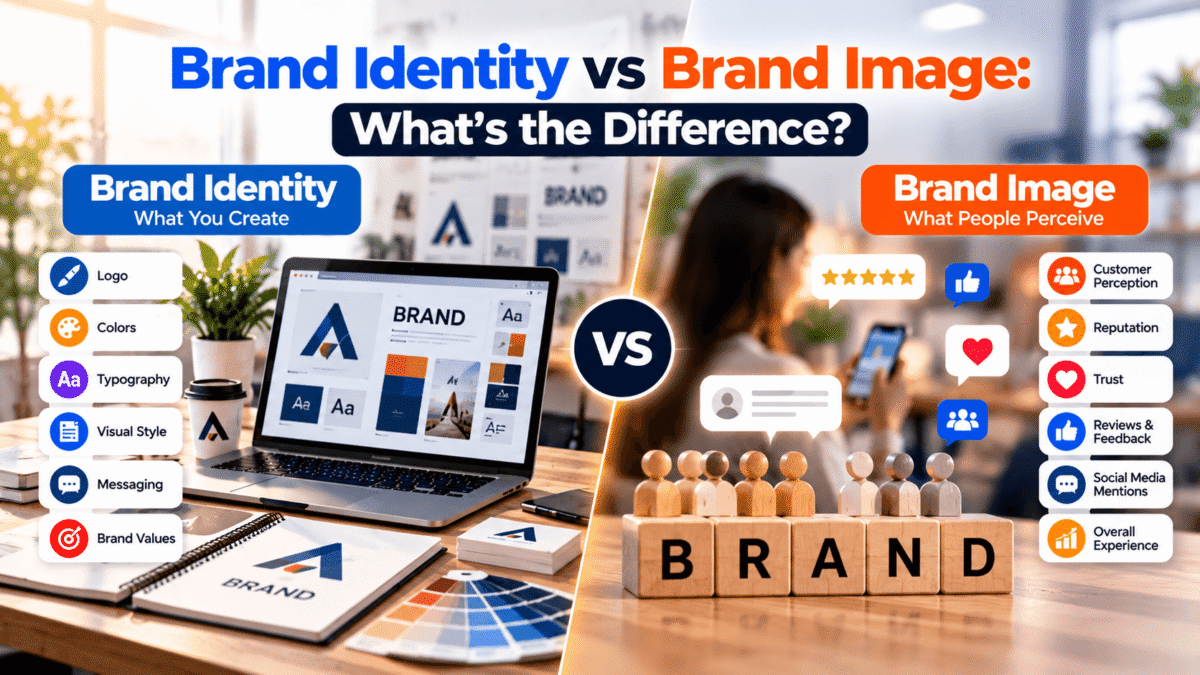
Brand identity refers to the collection of visual, verbal, and strategic elements a business uses to present itself to its target audience. It defines how a company wants to be recognised, understood, and remembered.
A strong brand identity communicates what a business represents, what makes it different, and why customers should consider choosing its products or services.
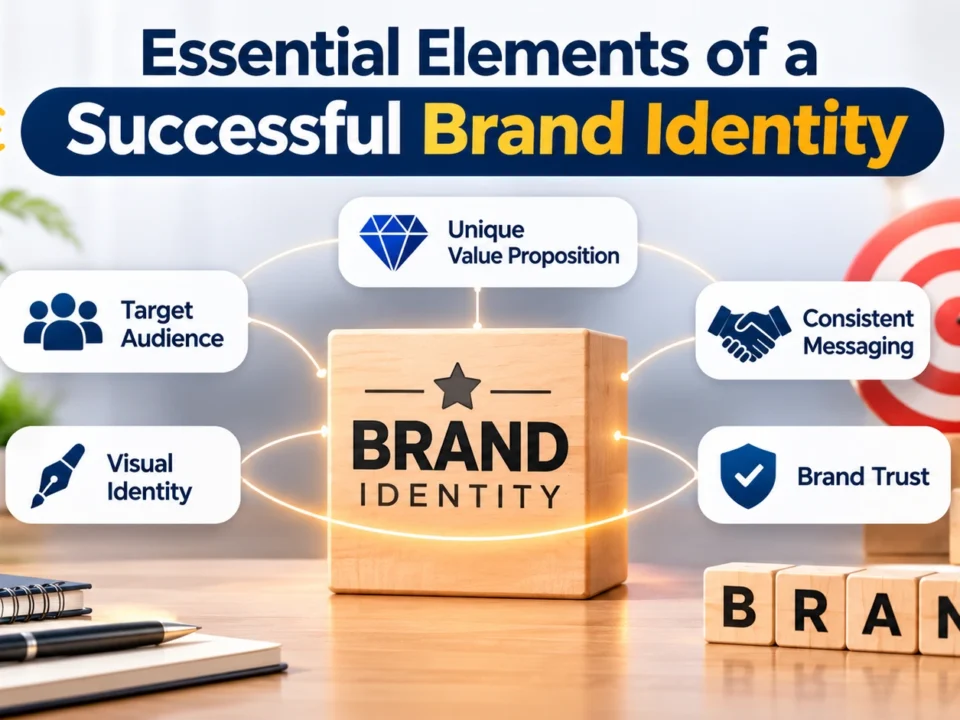
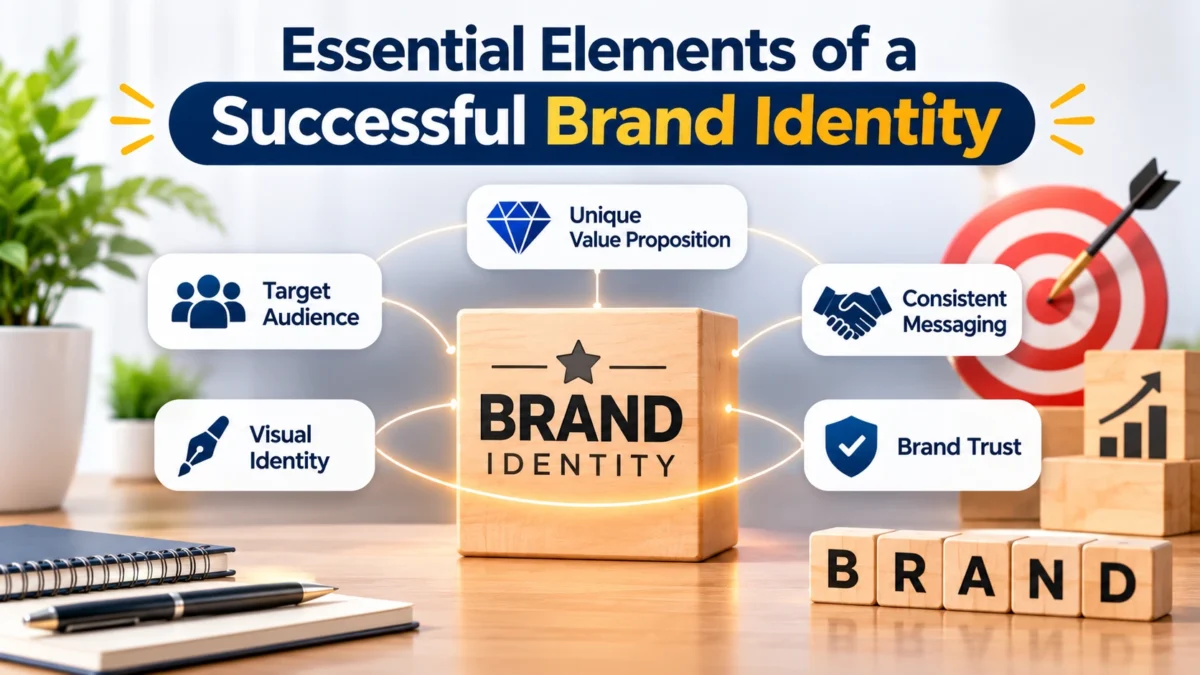
Brand identity extends beyond a logo. It includes several interconnected elements that work together to create a consistent brand experience.
1. Logo Design
A logo is a central visual identifier that helps customers recognise a business. It may include a symbol, wordmark, monogram, or combination of visual elements.
2. Brand Colours
Colours influence visual perception and help establish a recognisable appearance. A carefully selected colour palette should reflect the brand’s personality and remain consistent across marketing materials.
3. Typography
Typography defines how written information appears. Font styles, weights, spacing, and hierarchy contribute to the overall character of a brand.
4. Brand Voice
Brand voice describes how a business communicates with its audience. It includes language, tone, messaging style, and communication principles.
5. Imagery and Graphic Elements
Photography, illustrations, patterns, icons, and supporting graphics help establish a distinctive visual language.
6. Brand Guidelines
Brand guidelines document how visual and communication elements should be used. They help maintain consistency across websites, advertisements, packaging, presentations, and other brand touchpoints.
When these elements work together, businesses create a cohesive identity that customers can recognise across different platforms.
What Is Logo Design and Why Does It Matter?
Logo design is the process of creating a visual symbol or wordmark that represents a business, organisation, product, or service. It combines design principles, typography, colour theory, creativity, and strategic thinking to communicate a brand’s identity through a recognisable visual mark.
A logo should not simply look attractive. It should communicate something meaningful about the business while remaining clear, memorable, and functional.
For example, a technology company may use a clean geometric symbol to communicate innovation and precision, while a handcrafted product business may prefer an organic visual style that communicates creativity and authenticity.
Why Logo Design Is Important for Businesses
Creates Brand Recognition: A distinctive logo helps customers identify a business quickly. Repeated exposure to the same visual identity strengthens familiarity and makes the brand easier to remember.
Builds a Professional Image: A well-designed logo gives a business a more organised and professional appearance. It demonstrates attention to detail and helps establish a positive first impression.
Communicates Brand Personality: The shape, colour, typography, and overall design style of a logo can communicate whether a business is modern, traditional, premium, creative, or approachable.
Supports Marketing Activities: A logo provides a consistent visual identifier for advertisements, social media graphics, websites, brochures, packaging, and promotional materials.
Creates Differentiation: A distinctive logo helps businesses establish their own visual identity rather than appearing similar to competitors.
Strengthens Customer Familiarity: Consistent logo usage across different platforms helps customers become familiar with the brand, supporting long-term recognition.
How Logo Design Fits Into Brand Identity
Logo design and brand identity are closely connected, but they serve different purposes.
Brand identity represents the complete system through which a business communicates its personality and values. Logo design provides one of the most visible elements of that system.
Understanding How Logo Design Fits Into Brand Identity is essential because a logo should never be designed in isolation. It should reflect the brand’s positioning, target audience, communication style, and overall visual direction.
Here are the main ways logo design contributes to a complete brand identity.
1. Logo Design Creates the Visual Foundation
A logo often establishes the starting point for a brand’s visual identity. Its colours, shapes, typography, and design language can influence other branding elements.
For example, if a logo uses a minimal geometric symbol and modern typography, the website, business cards, brochures, and social media graphics can follow a similar visual direction.
This creates consistency across different brand materials.
However, the logo should not dictate every design decision. Instead, it should work as part of a broader visual system that allows other elements to complement its style.
2. Logo Design Communicates Brand Values
Every business has its own values, mission, and personality. A logo can communicate these characteristics through carefully selected visual elements.
For example:
- A sustainability-focused business may use natural shapes and earthy colours.
- A technology company may prefer clean lines and geometric forms.
- A premium service provider may use refined typography and a minimal design.
- A creative agency may experiment with expressive shapes and distinctive visual concepts.
The objective is to translate abstract brand values into visual communication.
When the logo reflects what the business genuinely represents, it becomes a meaningful part of the brand identity.
3. Logo Design Establishes Brand Recognition
Recognition develops when customers repeatedly encounter consistent visual elements.
A logo helps create this familiarity by providing a recognisable symbol that appears across different customer touchpoints.
Consider how a logo is used on:
- Company websites
- Social media profiles
- Product packaging
- Business cards
- Digital advertisements
- Email signatures
- Company presentations
- Signboards and office stationery
When customers encounter the same logo consistently, they become more familiar with the business.
This familiarity supports brand recall and helps customers distinguish the company from other businesses.
4. Logo Design Supports Brand Positioning
Brand positioning defines how a business wants to be perceived in its market.
A logo can support this positioning by communicating the appropriate visual personality.
For example, a luxury brand may use understated typography, balanced proportions, and refined design details. A youthful consumer brand may prefer brighter colours, expressive typography, and energetic shapes.
The design should reflect the intended market position rather than follow trends without strategic consideration.
A logo that communicates the wrong personality can create confusion about what a business offers and whom it serves.
5. Logo Design Creates Visual Consistency
Consistency is one of the most important principles of successful branding.
A business may communicate with customers through multiple channels, but its visual identity should remain recognisable throughout the experience.
A complete logo system includes variations for different applications, such as:
- Primary logo
- Secondary logo
- Icon or symbol
- Horizontal logo
- Vertical logo
- Monochrome logo
- Light and dark background versions
These variations allow businesses to maintain consistency while adapting to different layouts and design requirements.
6. Logo Design Supports Emotional Connections
Visual elements can influence how customers feel about a business.
Colours, shapes, typography, and symbols may create associations with confidence, creativity, reliability, excitement, or sophistication.
A meaningful logo can support these associations when its design reflects the brand’s personality and customer expectations.
However, emotional connections develop through the complete customer experience. Product quality, customer service, communication, and brand values must support the message presented by the visual identity.
Essential Elements of an Effective Logo Design
An effective logo is created through a combination of design principles and strategic decisions. Each element contributes to how customers interpret and recognise the brand.
1. Simplicity
Simplicity makes a logo easier to recognise, understand, and remember.
Overly complicated designs may contain unnecessary details that become difficult to identify when displayed at smaller sizes.
A simple logo focuses on essential visual characteristics without sacrificing the brand’s personality.
Simplicity also improves versatility, allowing the logo to work across websites, packaging, advertisements, and printed materials.
2. Memorability
A memorable logo contains distinctive visual characteristics that help customers recognise it.
This may come from a unique symbol, interesting typography, clever use of negative space, or a distinctive combination of shapes.
Memorability does not require complicated artwork. In many cases, a carefully developed minimal design can create a stronger impression than an overly decorative logo.
3. Colour Selection
Colour is an important part of visual communication.
Different colours can create different associations and emotional responses. However, their interpretation depends on cultural context, industry, audience, and application.
Common colour associations include:
- Blue: Often communicates reliability, stability, and professionalism.
- Red: Can suggest energy, confidence, and urgency.
- Green: Frequently represents nature, growth, and sustainability.
- Black: Can communicate sophistication, strength, and simplicity.
- Orange: Often expresses creativity, enthusiasm, and friendliness.
- Purple: Can communicate imagination, individuality, and luxury.
Businesses should select colours based on their brand personality and target audience rather than choosing them solely because they are popular.
4. Typography
Typography influences how a logo communicates its personality.
A serif typeface may create a traditional or refined appearance, while a sans-serif typeface can communicate simplicity and modernity.
Custom lettering can also help create a distinctive wordmark.
When selecting typography, designers should consider readability, spacing, proportion, and how the logo will appear at different sizes.
5. Scalability
A professional logo should maintain its visual quality across different dimensions.
It may appear on a small mobile screen, a business card, a website header, or a large outdoor signboard.
A scalable logo should remain clear and recognisable regardless of its display size.
Vector formats such as SVG, EPS, and AI are particularly useful because they allow logos to be resized without losing quality.
6. Versatility
A logo should work across different backgrounds, colours, materials, and digital environments.
For example, a design that looks attractive on a white website background should also have a suitable version for dark backgrounds and monochrome printing.
Versatility ensures that the logo remains practical across different marketing applications.
7. Relevance
A logo should be appropriate for the business, its industry, and its audience.
A playful design may suit a children’s product brand, while a corporate financial service may require a more structured visual approach.
Relevance ensures that the logo communicates the right personality and supports the company’s positioning.
Different Types of Logo Designs Used in Brand Identity
Not every business requires the same logo format. Different logo styles serve different purposes depending on the brand name, industry, communication objectives, and visual preferences.
1. Wordmark Logos
A wordmark logo uses the company name as its primary visual element.
The design focuses on typography, letter spacing, proportions, and custom lettering to create recognition.
Wordmarks are particularly suitable for businesses with distinctive names that want to build recognition around their brand name.
2. Lettermark Logos
Lettermark logos use initials or abbreviations instead of the complete company name.
They are useful for businesses with long names or organisations that prefer a compact visual identity.
The main challenge is creating a distinctive design that remains easy to recognise.
3. Symbol or Pictorial Logos
Symbol-based logos use visual illustrations or graphical marks to represent a brand.
They may communicate an idea, product category, business purpose, or distinctive brand concept.
These logos can become highly recognisable when used consistently.
4. Abstract Logos
Abstract logos use original shapes and geometric forms rather than recognisable objects.
They allow businesses to develop a distinctive visual identity without relying on literal industry-related symbols.
This approach is particularly useful when a company wants a modern and flexible brand image.
5. Combination Logos
Combination logos bring together typography and a visual symbol.
This approach gives businesses the flexibility to use the complete logo or separate elements depending on the application.
It is a practical choice for businesses that want to establish recognition through both their name and a distinctive symbol.
6. Emblem Logos
Emblem logos combine typography and imagery within a unified shape, badge, or seal.
They are often used by educational institutions, organisations, hospitality businesses, and heritage-focused brands.
The design should be carefully balanced to ensure that its details remain readable at smaller sizes.
The Relationship Between Logo Design and Other Branding Elements
A logo cannot establish a complete brand identity by itself. It must work alongside other visual and communication elements.
The relationship between these elements determines whether a business appears consistent and professional.
Logo Design and Brand Colours
The logo’s colour palette often becomes an important reference for the wider brand colour system.
These colours can be extended into website backgrounds, buttons, promotional graphics, presentation layouts, and packaging.
A complete colour system should also define supporting colours, neutral shades, and contrast requirements.
This allows businesses to create visual variety without losing their identity.
Logo Design and Typography
Typography should complement the logo’s visual personality.
For example, a modern geometric logo may work well with clean sans-serif typography throughout the website and marketing materials.
A brand that uses decorative lettering in its logo may choose simpler supporting fonts to maintain readability.
The objective is to establish a consistent typographic hierarchy for headings, body text, captions, and other content.
Logo Design and Website Design
A company website is one of the most important digital brand touchpoints.
The logo generally appears in the website header, footer, favicon, and other visual areas.
Its design should work with the website’s layout, colour palette, typography, and overall user experience.
A properly integrated brand identity makes the website appear more cohesive and helps visitors understand the company’s personality.
Logo Design and Packaging Design
For businesses selling physical products, packaging is an important branding opportunity.
The logo helps customers identify the product and connect it with the manufacturer.
Its placement, size, colour, and visibility should be considered alongside packaging materials, product information, and other graphic elements.
Consistent packaging design can strengthen product recognition across retail environments and online marketplaces.
Logo Design and Social Media Branding
Social media platforms provide repeated opportunities for customers to interact with a brand.
A consistent logo helps establish recognition through profile images, post designs, cover graphics, and promotional content.
Businesses should prepare suitable logo variations for different platform requirements rather than using one unsuitable version everywhere.
Logo Design and Marketing Materials
Brochures, business cards, presentations, advertisements, and email signatures all contribute to brand perception.
Using the same logo system and visual guidelines across these materials creates a unified appearance.
This consistency makes marketing communication more professional and recognisable.
The Professional Logo Design Process: From Research to Final Identity
Creating an effective logo requires more than opening a design application and experimenting with shapes.
A professional logo design process involves research, strategic planning, concept development, testing, and refinement.
Step 1: Understand the Business
The first step is understanding the organisation.
Designers should learn about the company’s products, services, objectives, values, history, and long-term vision.
This information provides the foundation for developing a meaningful design.
Step 2: Identify the Target Audience
A logo should communicate effectively with the people the business wants to reach.
Understanding the target audience helps designers make informed decisions about colours, typography, visual style, and overall presentation.
For example, the visual direction for a business targeting corporate decision-makers may differ from a brand targeting young consumers.
Step 3: Research the Industry and Competitors
Industry research helps identify common visual patterns and opportunities for differentiation.
Designers should examine how businesses in the same market use colours, symbols, typography, and other design elements.
The objective is not to copy existing designs but to identify ways to establish a distinctive identity.
Step 4: Define the Creative Direction
Before developing concepts, designers should establish a clear creative direction.
This includes defining the brand personality, preferred visual style, colour direction, typography approach, and communication objectives.
A clear direction makes the design process more focused.
Step 5: Develop Logo Concepts
Designers explore different creative approaches based on the established strategy.
Concepts may include wordmarks, symbols, monograms, abstract shapes, or combination marks.
Each concept should have a clear design rationale explaining how it supports the brand.
Step 6: Refine the Selected Design
Once a suitable direction is selected, the design undergoes refinement.
This may involve adjusting:
- Letter spacing
- Shape proportions
- Colour combinations
- Symbol alignment
- Visual balance
- Negative space
- Overall readability
Small refinements can significantly improve the quality of the final logo.
Step 7: Test the Logo Across Applications
Before final approval, the logo should be tested in different environments.
These may include website headers, mobile screens, business cards, packaging, social media graphics, and printed documents.
Testing helps identify practical issues before the logo becomes part of the complete brand identity.
Step 8: Prepare Final Logo Files
The final stage involves preparing the required logo formats and variations.
Common formats include:
- SVG: For scalable digital applications.
- PNG: For transparent-background usage.
- PDF: For sharing and printing.
- EPS: For professional print workflows.
- AI: For editable Adobe Illustrator artwork.
A professional logo package should also include colour specifications, monochrome versions, and clear usage guidelines.
How a Strong Logo Builds Customer Trust
Trust is an important factor in customer decision-making.
Before purchasing a product or selecting a service provider, customers often evaluate how professional, reliable, and credible a business appears.
A consistent logo and brand identity can contribute to this perception.
Creates a Positive First Impression
Customers often encounter a business through its website, advertisements, packaging, or social media profiles.
A well-designed logo contributes to a professional first impression and makes the business appear more organised.
Improves Brand Familiarity
Repeated exposure to consistent visual elements helps customers become familiar with a company.
Over time, this familiarity can support recognition and make the business easier to identify.
Communicates Professionalism
A carefully designed logo demonstrates that the business has invested in its presentation.
When supported by consistent communication and quality services, this contributes to a credible brand image.
Supports Long-Term Customer Relationships
A logo is not a replacement for product quality, customer service, or business reliability.
However, it provides a consistent visual identity through which customers can recognise the company during their interactions.
Common Logo Design Mistakes Businesses Should Avoid
Even businesses with strong products and services can struggle with brand recognition when their visual identity lacks consistency.
Avoiding common logo design mistakes helps create a more effective and practical brand system.
1. Following Design Trends Without Strategy
Design trends change frequently. A logo created only to follow a temporary trend may become outdated quickly.
Businesses should prioritise relevance, recognition, and long-term usability over short-lived visual styles.
2. Using Too Many Colours
An excessive colour palette can make a logo appear visually complicated.
A focused colour system generally makes it easier to maintain consistency across different applications.
3. Adding Unnecessary Details
Too many decorative elements can reduce clarity, particularly when the logo is displayed at smaller sizes.
A well-structured design should communicate its main visual idea without unnecessary complexity.
4. Ignoring Scalability
A logo that looks attractive on a large screen may become unreadable when used as a favicon or social media profile image.
Always test the design at different dimensions before finalising it.
5. Choosing Inappropriate Typography
Typography should reflect the brand’s personality while maintaining readability.
Using fonts that conflict with the business’s positioning can weaken the overall identity.
6. Copying Competitor Designs
Copying existing logos reduces originality and may create legal and brand differentiation issues.
Businesses should develop unique visual concepts based on their own values, objectives, and market position.
7. Ignoring Brand Guidelines
Even a professionally designed logo can lose its impact when it is used inconsistently.
Businesses should establish clear rules for logo placement, colour variations, minimum size, spacing, and background usage.
The Role of Brand Guidelines in Maintaining Logo Consistency
Brand guidelines provide instructions for using a company’s visual identity correctly.
They ensure that employees, designers, marketing teams, and external agencies follow the same standards when creating brand materials.
A comprehensive brand guideline document should include:
Logo Variations: Primary logo, secondary logo, symbol, monochrome versions, and approved background treatments.
Colour Specifications: HEX, RGB, CMYK, and Pantone values where applicable.
Typography Rules: Primary and secondary fonts, font weights, heading styles, and body text hierarchy.
Clear Space: Minimum spacing around the logo to maintain visibility and prevent visual clutter.
Minimum Size: The smallest recommended dimensions for digital and print applications.
Incorrect Usage: Examples of stretching, distorting, recolouring, rotating, or modifying the logo incorrectly.
Application Examples: Demonstrations of how the identity should appear on websites, packaging, stationery, advertisements, and social media.
These guidelines protect the consistency of the brand as the business grows and introduces new marketing channels.
How to Know When Your Business Needs a Logo Redesign
A logo that once represented a business effectively may no longer communicate its current direction.
As companies evolve, their products, target audiences, services, and market positioning may change.
In such situations, reviewing the existing visual identity becomes important.
Your Logo Looks Outdated
If the logo uses visual styles that no longer represent the company’s current positioning, a redesign may help modernise its appearance.
Your Business Has Changed Its Direction
A company that introduces new services, enters different markets, or changes its business model may require a more relevant visual identity.
Your Logo Does Not Work on Digital Platforms
Older logo designs may not adapt well to mobile interfaces, social media profiles, and modern website layouts.
A redesigned logo system can improve digital usability.
Your Brand Looks Inconsistent
If different departments or marketing channels use multiple versions of the logo, a brand refresh can help establish a unified identity.
Your Logo Does Not Differentiate Your Business
If the existing design looks similar to several competitors, a more distinctive visual direction may help improve recognition.
However, redesigning a logo should always involve a clear objective. Changing a familiar logo without a strategic reason may weaken existing recognition.
Logo Design for Startups and Established Businesses
The role of logo design varies depending on a company’s stage of development.
Both startups and established organisations benefit from a carefully developed brand identity, but their requirements may differ.
Logo Design for Startups
For startups, a logo provides an opportunity to establish a professional identity from the beginning.
A new business should consider:
- Defining its target audience.
- Establishing its brand personality.
- Selecting an appropriate visual direction.
- Creating a memorable logo.
- Developing a consistent colour palette.
- Preparing logo variations for digital and print use.
Startups should also consider future growth when selecting their logo style. A flexible design can support new products, services, and marketing channels as the business expands.
Logo Design for Established Businesses
Established companies may already have customer recognition and an existing visual identity.
Their design requirements may involve:
- Modernising an outdated logo.
- Improving digital compatibility.
- Standardising logo variations.
- Updating brand guidelines.
- Aligning the visual identity with new business objectives.
In these situations, maintaining existing brand recognition while improving visual consistency is particularly important.
The Future of Logo Design in Digital Branding
The digital environment continues to influence how businesses create and use their visual identities.
Logos must now work across websites, mobile applications, social media platforms, digital advertisements, presentations, and emerging technologies.
Several developments are shaping modern logo design.
Responsive Logo Systems
Responsive logos adapt to different screen sizes and layout requirements.
A complete system may include a full logo for desktop websites, a compact version for mobile screens, and a simplified symbol for smaller spaces.
This improves usability while maintaining brand recognition.
Minimal and Functional Design
Businesses increasingly require logos that remain clear across multiple digital environments.
Minimal design approaches can help reduce unnecessary visual complexity and improve flexibility.
Motion-Based Branding
Animated logos are becoming useful in digital advertisements, videos, website introductions, and social media content.
Motion can introduce additional personality while preserving the essential characteristics of the original logo.
AI-Assisted Design Workflows
Artificial intelligence tools can support early-stage research, mood boards, visual exploration, and creative brainstorming.
However, effective logo development still requires human judgement, strategic thinking, originality, and careful refinement.
Businesses should also review intellectual property considerations before adopting AI-assisted design outputs commercially.
Accessibility and Digital Usability
Modern logo systems should consider visibility, contrast, and readability across different screens.
A practical design should remain identifiable without depending entirely on colour or intricate details.
How to Choose the Right Logo Design Agency
Selecting the right design partner is important for businesses that want to establish a professional and consistent brand identity.
A logo design agency should understand the relationship between visual communication, business strategy, and customer perception.
Consider the following factors before selecting an agency.
1. Review the Design Portfolio
Examine previous projects to understand the agency’s design capabilities, creative approach, and experience across different industries.
2. Understand Its Design Process
A professional agency should follow a structured process involving research, discovery, concept development, feedback, and final delivery.
3. Evaluate Strategic Understanding
The agency should understand your business objectives, target audience, brand positioning, and long-term goals before developing logo concepts.
4. Check File Deliverables
Confirm that the agency provides editable vector files, transparent logo versions, colour variations, and other required formats.
5. Ask About Brand Guidelines
A complete branding solution should provide guidance on how the logo and other visual elements should be used consistently.
6. Consider Long-Term Usability
Choose a design partner that prioritises versatility, originality, scalability, and practical application rather than focusing only on appearance.
Why Professional Logo Design Is a Valuable Business Investment
A logo is a long-term business asset. It appears throughout the customer journey and contributes to how people recognise and perceive an organisation.
Investing in professional logo design can help businesses establish a clear visual direction and create a consistent foundation for their marketing activities.
Its value extends beyond aesthetics.
A professionally developed logo can:
- Improve brand recognition.
- Establish a distinctive visual identity.
- Support consistent marketing communication.
- Communicate business personality.
- Strengthen professional presentation.
- Improve brand differentiation.
- Support future business expansion.
However, the real value of logo design comes from how effectively it works within the complete brand identity.
A visually attractive logo without consistent branding, clear messaging, and a positive customer experience cannot independently build a successful brand.
Businesses should therefore approach logo design as part of a broader branding strategy rather than treating it as an isolated creative task.
Conclusion
Understanding How Logo Design Fits Into Brand Identity is essential for businesses that want to develop a recognisable, consistent, and professional brand image.
A logo is one of the most visible elements of brand identity, but its purpose extends beyond creating an attractive visual symbol. It communicates brand personality, supports positioning, encourages recognition, and provides a foundation for consistent visual communication.
From colour selection and typography to website design, packaging, social media, and marketing materials, every branding element should work together to create a unified experience.
Businesses should approach logo design strategically by understanding their audience, defining their values, researching their market, and developing a visual identity that reflects their long-term objectives.
Whether launching a startup or modernising an established business, a thoughtfully designed logo can become an important part of building a strong and memorable brand.
Ultimately, successful branding is not about having the most complicated logo. It is about creating a meaningful and consistent identity that customers can recognise, understand, and trust.
Build a Strong Brand Identity with AsquareX Digital Agency
Your logo is more than a visual symbol. It is an important part of how your business communicates its personality, values, and professional image.
At AsquareX Digital Agency, we understand the importance of creating meaningful visual identities that align with business objectives and connect with target audiences.
Whether you need a new logo, a complete brand identity, or a professional branding strategy, developing a consistent visual presence can help your business stand out in a competitive marketplace.
Ready to create a distinctive identity for your business?
Get in touch with AsquareX Digital Agency and take the next step towards building a memorable brand.
Contact AsquareX Digital Agency for Professional Branding Services